
Why RO Not Starting or No Power Light in Gurgaon: Adaptor, SMPS and Pump Faults
Why RO Not Starting or No Power Light in Gurgaon: Adaptor, SMPS and Pump Faults
Water purification systems have become an essential part of every Indian household, especially in cities like Gurgaon where water quality remains a persistent concern. When your RO water purifier suddenly stops working or shows no power indication, it can disrupt your daily routine and leave you worried about drinking water safety. The most common culprits behind these power-related issues are adaptor failures, SMPS malfunctions, and pump faults. Understanding these problems is crucial because getting timely RO Water Purifier service can save you from expensive replacements and ensure your family continues to access safe drinking water. Many Gurgaon residents face these technical challenges, particularly during voltage fluctuation periods and extreme weather conditions that affect electrical components.
The power supply system in RO purifiers consists of interconnected components that work together to ensure smooth operation. When any single element fails, the entire system can shut down, leaving you with an unresponsive unit. While some issues might seem minor, ignoring early warning signs can lead to more significant damage. The good news is that most power-related problems are fixable with proper diagnosis and professional intervention. Whether you need ro service gurgaon or simple troubleshooting guidance, recognizing the symptoms early makes all the difference.
Gurgaon's infrastructure challenges, including frequent power cuts and voltage irregularities, put additional stress on water purifier components. The city's hard water conditions also contribute to increased wear on internal parts, making regular maintenance even more critical. When your RO system displays no power light or refuses to start, it signals that immediate attention is required. Quick action not only prevents water shortage emergencies but also protects your investment in the purification system.
This comprehensive guide will walk you through the common reasons behind RO power failures, help you identify specific component issues, and provide practical solutions. From understanding adaptor problems to recognizing SMPS failures and pump malfunctions, we will cover everything you need to know about getting your water purifier back to optimal performance through reliable ro repair service options available in your area.
Understanding the RO Power Supply System and Its Components
The power supply system in a reverse osmosis water purifier is more complex than most people realize. At its core, the system comprises three main components: the adaptor that converts AC power to DC, the SMPS (Switch Mode Power Supply) that regulates voltage, and the pump that creates necessary pressure for filtration. Each component plays a vital role in ensuring your purifier operates efficiently and delivers clean drinking water consistently.
The adaptor serves as the first point of contact between your household electrical supply and the RO system. It transforms the 220-240 volts AC supply into a lower DC voltage suitable for the purifier's internal circuits. Most residential RO systems in India use adaptors rated between 24V to 36V DC output. These adaptors are designed to handle normal voltage fluctuations, but Gurgaon's erratic power supply often exceeds their tolerance limits, leading to premature failure.
The SMPS acts as the brain of the power distribution system, managing voltage regulation and protecting sensitive electronic components from surges. Modern RO purifiers incorporate sophisticated SMPS units that include multiple safety features like over-voltage protection, short-circuit protection, and thermal shutdown capabilities. When functioning correctly, the SMPS ensures that each component receives precisely the voltage it needs, regardless of input fluctuations. However, continuous exposure to unstable power conditions gradually degrades its performance.
The pump is arguably the most power-intensive component in your RO system, consuming significant energy to generate the 60-80 PSI pressure required for effective reverse osmosis filtration. Pumps typically draw between 30 to 50 watts during operation, and any electrical issues affecting their power supply can immediately halt the entire purification process. Understanding how these three components interact helps you diagnose problems more accurately and communicate effectively with service technicians.
Common Adaptor Faults and Their Warning Signs
Adaptor failures represent one of the most frequent causes of RO power issues in Gurgaon households. These compact devices endure constant stress from voltage fluctuations, ambient temperature changes, and continuous operation cycles. When an adaptor begins failing, it typically shows several warning signs before complete breakdown. Recognizing these symptoms early allows you to arrange for professional assistance before you face a complete system shutdown.
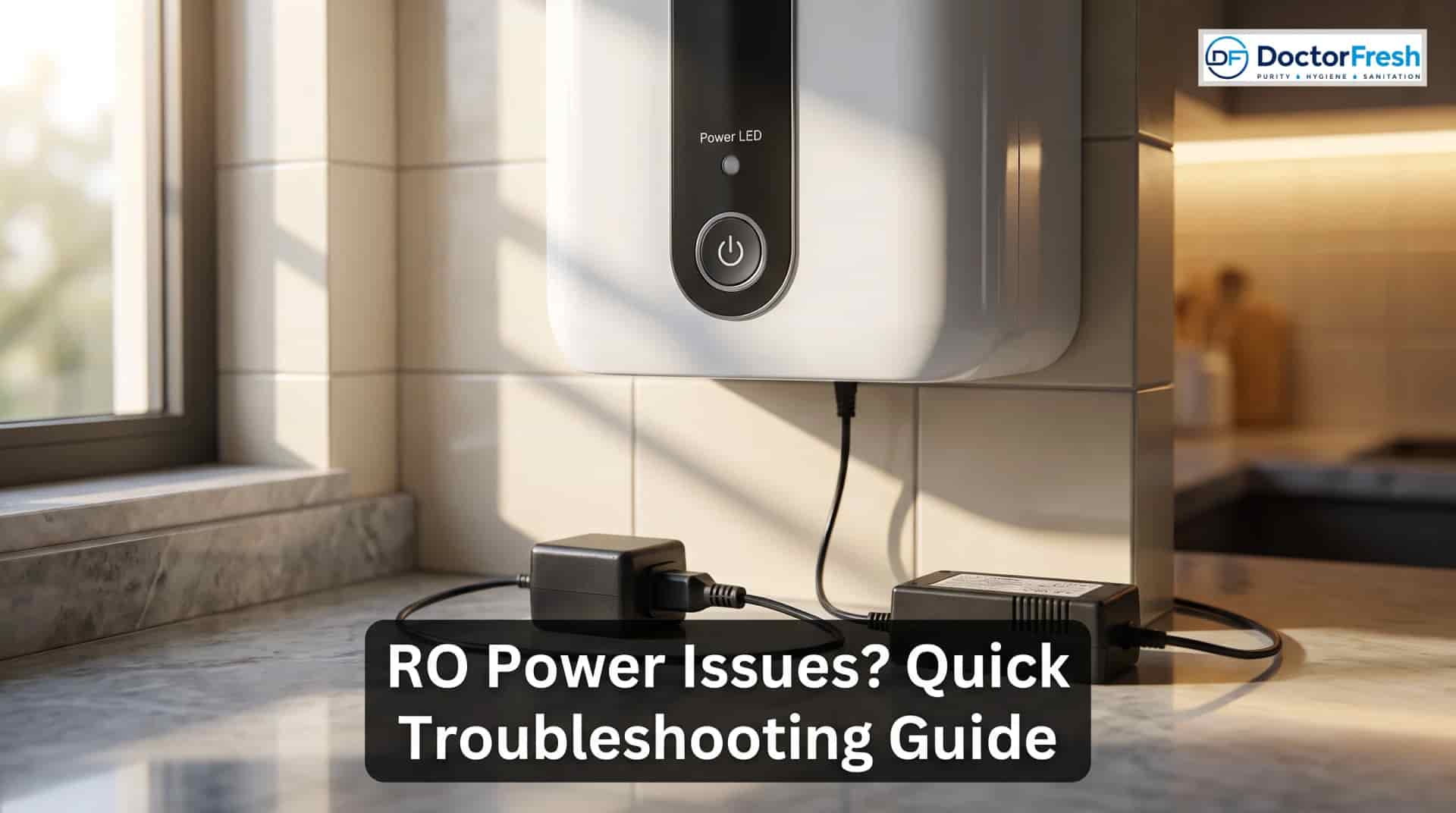
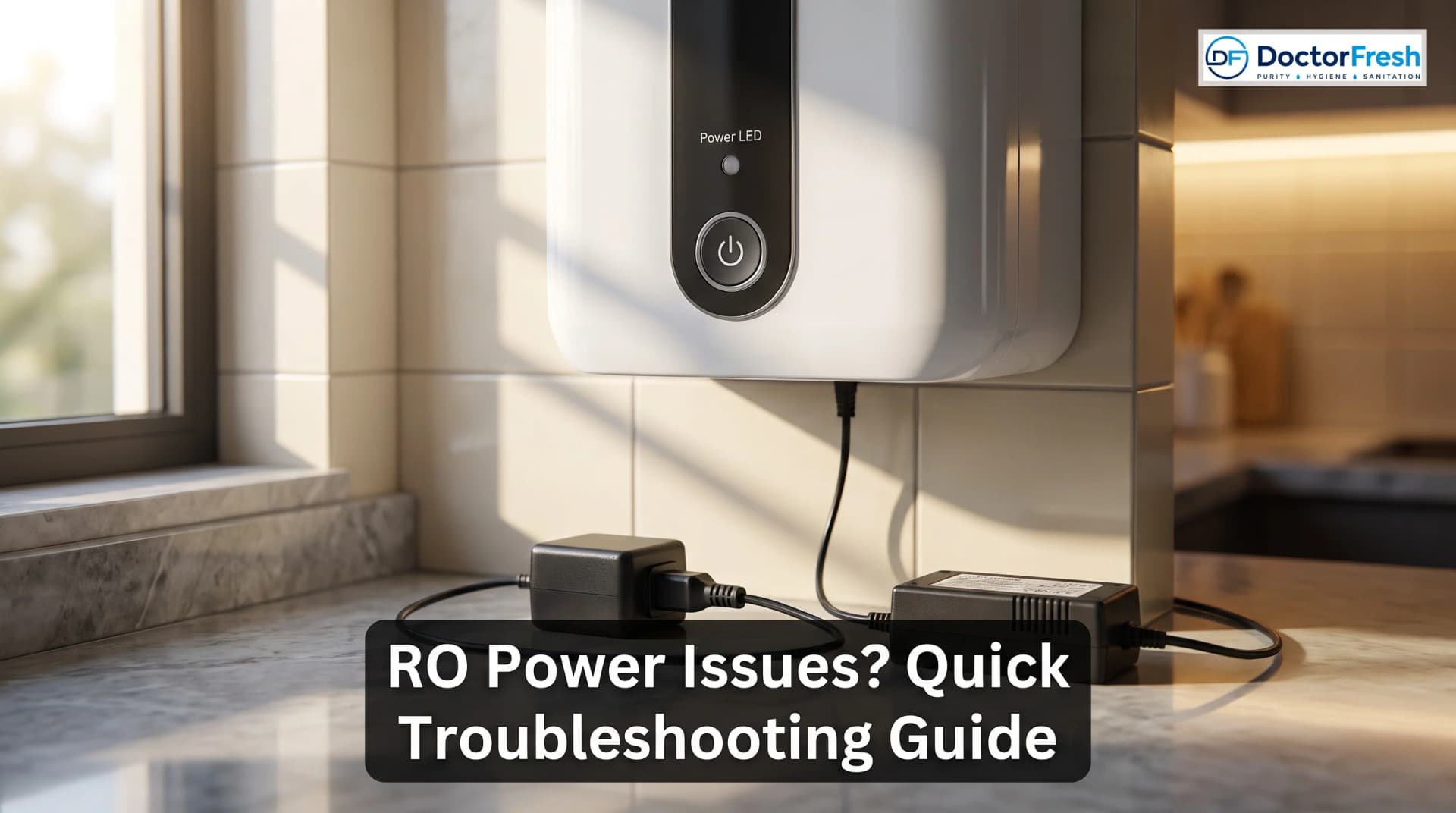
The most obvious indicator of adaptor trouble is the absence of any power light on your RO unit. When you plug in the system and nothing illuminates, the adaptor is usually the first suspect. However, intermittent power delivery presents a trickier scenario where the light flickers on and off randomly, or the system starts and stops without warning. This behavior often stems from loose internal connections or partially damaged transformer coils within the adaptor.
Physical examination of the adaptor can reveal critical clues about its condition. Check for any burning smell emanating from the unit, which indicates overheated components or short circuits. Look for discoloration, bulging, or melted plastic on the adaptor casing, all signs of excessive heat buildup. The connecting cable should be examined for frayed wires, exposed conductors, or damaged insulation near the plug points. Sometimes the problem lies not in the adaptor itself but in the connection ports, which accumulate dust and moisture over time.
Temperature is another important diagnostic factor. While adaptors naturally become warm during operation, they should never be too hot to touch comfortably. Excessive heat generation suggests internal component failure or inadequate cooling. Gurgaon's summer temperatures exceeding 45 degrees Celsius already stress these devices, and poor ventilation around the installation area compounds the problem. Many residents make the mistake of placing their RO units in enclosed cabinets without adequate airflow, accelerating adaptor deterioration.
Testing the adaptor requires a multimeter to measure output voltage. A properly functioning adaptor should deliver its rated voltage within a 10 percent tolerance range. Readings significantly below the specified output indicate declining performance, while zero output confirms complete failure. For those without technical expertise, the safest approach involves contacting professional service providers who carry appropriate testing equipment and replacement parts.
SMPS Malfunctions and Diagnosis Techniques
Switch Mode Power Supply failures present more complex challenges than simple adaptor problems because the SMPS integrates multiple functions within a compact circuit board. These sophisticated components regulate power distribution to various RO system elements including the control panel, solenoid valves, sensors, and the pump motor. When an SMPS malfunctions, the symptoms can range from complete power loss to erratic system behavior that confuses homeowners.
One characteristic symptom of SMPS trouble is the power light illuminating but the pump failing to activate. This occurs because the low-power LED indicators can still function on minimal voltage while the high-power pump motor cannot start. You might hear a faint humming sound as the pump attempts to engage but lacks sufficient power to overcome starting resistance. In some cases, the system starts normally but shuts down after a few seconds, indicating thermal protection circuits within the SMPS are detecting problems.
SMPS boards contain several components that commonly fail, including electrolytic capacitors, bridge rectifiers, voltage regulators, and switching transistors. Capacitors particularly suffer in hot climates like Gurgaon, where high temperatures accelerate their electrolyte degradation. Failed capacitors often show visible bulging at the top or leakage of electrolyte fluid. However, some failures are invisible to the naked eye, requiring oscilloscope testing and electronic expertise to identify.
Voltage fluctuations represent the primary enemy of SMPS longevity. While these units include protection circuits, repeated exposure to under-voltage and over-voltage conditions eventually overwhelms their defensive capabilities. Lightning strikes and sudden power restoration after outages create particularly damaging surge events. Installing a voltage stabilizer or surge protector specifically rated for RO systems can significantly extend SMPS lifespan, an investment that costs considerably less than frequent component replacements.
Professional technicians approach SMPS diagnosis systematically, testing input voltage, output voltages to various components, and examining waveforms for irregularities. They check for proper grounding, inspect solder joints for cold connections, and measure resistance across critical components. Attempting DIY SMPS repairs is not recommended for most homeowners because these boards operate at potentially dangerous voltages and contain static-sensitive components that require special handling.
Pump Electrical Faults and Resolution Methods
The RO pump motor represents the mechanical heart of your purification system, and electrical issues affecting the pump account for a significant percentage of no-start complaints. Unlike adaptors and SMPS units that fail gradually, pump problems can develop suddenly, leaving you with no warning before complete breakdown. Understanding pump electrical characteristics helps you recognize when this component requires attention.
Pump motors in residential RO systems operate on low-voltage DC power, typically 24 or 36 volts, making them inherently safer than AC motors but also more sensitive to power quality issues. These motors contain carbon brushes that conduct electricity to the rotating armature, and these brushes wear down over time with normal use. Worn brushes create poor electrical contact, causing the motor to draw excessive current while delivering insufficient power. The result is a motor that hums or vibrates but fails to rotate properly.
Electrical problems within the pump motor often announce themselves through unusual sounds. A grinding or rattling noise suggests bearing wear, which increases friction and electrical load. A high-pitched squealing indicates brush-commutator contact issues. Complete silence when power is applied, except for a slight clicking sound, typically means the motor windings have failed or the start capacitor (in some models) has died. Each symptom requires different repair approaches, from simple brush replacement to complete motor exchange.
Testing a pump motor requires disconnecting it from the RO system and applying direct power from a known good source matching its voltage rating. If the motor runs smoothly when isolated, the problem likely lies in the SMPS or power distribution circuitry. If it fails to operate even with direct power, the motor itself needs service or replacement. Measuring the motor's resistance with a multimeter provides additional diagnostic information; extremely high or extremely low resistance readings compared to manufacturer specifications indicate winding problems.
Environmental factors significantly impact pump motor longevity in Gurgaon conditions. Dust infiltration into the motor housing increases wear on brushes and bearings. High ambient temperatures stress the motor windings and insulation materials. Water leaks from filter housings or membrane assemblies can reach electrical connections, causing corrosion and short circuits. Regular cleaning around the RO installation area and prompt attention to any water leaks helps prevent these secondary causes of pump failure.
Comprehensive Troubleshooting Steps and When to Call Professionals
Systematic troubleshooting saves time and prevents unnecessary component replacements when dealing with RO power issues. Following a logical diagnostic sequence helps identify the actual problem rather than guessing and replacing parts randomly. However, knowing when to stop DIY efforts and contact experienced technicians is equally important for safety and effective repair.
Begin your troubleshooting by verifying the most basic elements. Check that the main power outlet is functioning by testing it with another appliance. Examine the power cord for visible damage and ensure it is firmly seated in both the wall outlet and RO unit. Confirm that any GFCI outlets or circuit breakers have not tripped. These simple checks resolve surprising numbers of "no power" complaints without any component replacement.
Next, inspect the adaptor as described earlier. If you have a multimeter and feel comfortable using it, measure the adaptor output voltage. Without a meter, try feeling the adaptor temperature after it has been plugged in for a few minutes. A cold adaptor likely indicates complete internal failure. If the adaptor tests good or you have replaced it with a known working unit and problems persist, the issue lies deeper in the system.
Access the RO unit's interior by removing the cover panels according to your model's design. Look for obvious problems like disconnected wires, corroded terminals, burnt components, or water damage on circuit boards. Check that all connectors are properly seated. Some connection issues develop simply from vibration over time, and reseating connectors might restore function. Document the original wiring configuration with photos before disconnecting anything to ensure correct reassembly.
For safety reasons, always unplug the RO system before opening it or touching internal components. Even low-voltage DC systems can deliver nasty shocks, and capacitors in SMPS circuits can retain dangerous charges even after power disconnection. If you detect any burning smell, see charred components, or find yourself unable to identify the problem source, stop immediately and call professional help.
Professional technicians bring several advantages beyond technical knowledge. They carry specialized diagnostic equipment, maintain inventories of compatible replacement parts, and complete repairs efficiently. Most importantly, they provide service warranties covering their work, protecting you from repeated expenses if problems recur. The cost of professional repair service typically proves more economical than purchasing wrong parts or causing additional damage through improper DIY attempts.
Preventive Maintenance for Power Components and Long-Term Reliability
Preventing electrical problems is always preferable to fixing them after failure. A proactive maintenance approach significantly extends the lifespan of adaptors, SMPS units, and pump motors while ensuring consistent RO performance. Implementing simple protective measures costs little but delivers substantial benefits over your purifier's operational lifetime.
Voltage stabilization forms the foundation of electrical protection for RO systems in areas with unreliable power supply like many Gurgaon neighborhoods. Installing a dedicated voltage stabilizer rated for at least 500VA capacity shields your RO from harmful under-voltage and over-voltage events. Alternatively, a good quality surge protector with adequate joule rating provides protection against sudden spikes. Position these protective devices as close to the RO unit as practical, and ensure they themselves are periodically tested for continued functionality.
Environmental control around your RO installation significantly affects electrical component longevity. Ensure adequate ventilation around the unit, particularly around the adaptor and any area where the SMPS is located. Avoid installing RO systems in direct sunlight or near heat-generating appliances like refrigerators or ovens. Maintain ambient temperature below 40 degrees Celsius if possible through proper placement or additional cooling measures. Keep the installation area clean and dust-free, as particulate contamination accelerates wear on electrical components.
Regular professional servicing should include electrical system inspection alongside the standard filter replacements and membrane cleaning. Annual or bi-annual comprehensive service visits allow technicians to identify developing problems before they cause breakdowns. During these visits, connections are checked and tightened, components are tested for proper output, and wear indicators are assessed. This preventive approach typically costs less than emergency repair calls and extends equipment life considerably.
Maintaining a service log helps track your RO system's history and identify recurring patterns. Record dates of filter changes, any problems encountered, repairs performed, and components replaced. This documentation proves valuable when discussing issues with service technicians and helps determine whether persistent problems indicate deeper system incompatibilities or installation issues requiring more comprehensive solutions.
Comparing Component Replacement Costs and Service Options
Understanding the typical costs associated with various component repairs helps you budget appropriately and evaluate service quotes for reasonableness. Prices vary based on RO model, brand, and service provider, but the following table provides general guidance for Gurgaon market rates in 2026:
| Component | Replacement Cost (INR) | Service Call Charge (INR) | Total Typical Cost (INR) |
|---|---|---|---|
| Adaptor | 300-800 | 200-400 | 500-1200 |
| SMPS Board | 800-2000 | 300-500 | 1100-2500 |
| Pump Motor | 1200-2500 | 300-500 | 1500-3000 |
When your RO water purifier shows no power or refuses to start, the problem typically lies in three key components: the electrical adaptor that converts AC to DC power, the SMPS (Switched-Mode Power Supply) that regulates voltage, or the booster pump that creates necessary pressure. Learn more about diagnosing these faults by checking for blown fuses, testing voltage output with a multimeter, and identifying unusual sounds from the pump motor—empowering you to understand whether you need a simple adaptor replacement or professional intervention.
Need help choosing or servicing a purifier?
Talk to a Doctor Fresh water expert or book a free water quality test at your home.
Comments
No comments yet — be the first.